
Perhaps this has been one of the most unique trips I’ve taken in my life. I could only compare it to visiting Belarus, Singapore or Turkey but still, Morocco is an adventure on its own.
Morocco was made a French protectorate in 1912 but regained independence in 1956. Today it is the only monarchy in North Africa. Although the country is rapidly modernizing and enjoys a rising standard of living, it retains much of its ancient architecture and even more of its traditional customs. As I was walking on the busy streets of Marrakesh, I could feel the clash between old and new, west and east, tradition and modern.
Morocco is the only African country with coastal exposure to both the Atlantic Ocean and the Mediterranean Sea. Its area—excluding the territory of Western Sahara, which Morocco controls—is slightly larger than the U.S. state of California. Two small Spanish enclaves, Ceuta and Melilla, are situated on the country’s northern coast.
Marrakesh is mind blowing, from the kind hospitality of the locals to the cozy riads, to the stimulant souks. The city has it all and from day one it cast its spell on us.
Before I get into any more details, I must also confess I only knew 2 cities from Morocco before coming: Marrakesh and the famous Casablanca, none of which is the capital - something I didn't know either. The capital is called Rabat and it rests along the shores of the Bouregreg River and the Atlantic Ocean, quite near from Casablanca.
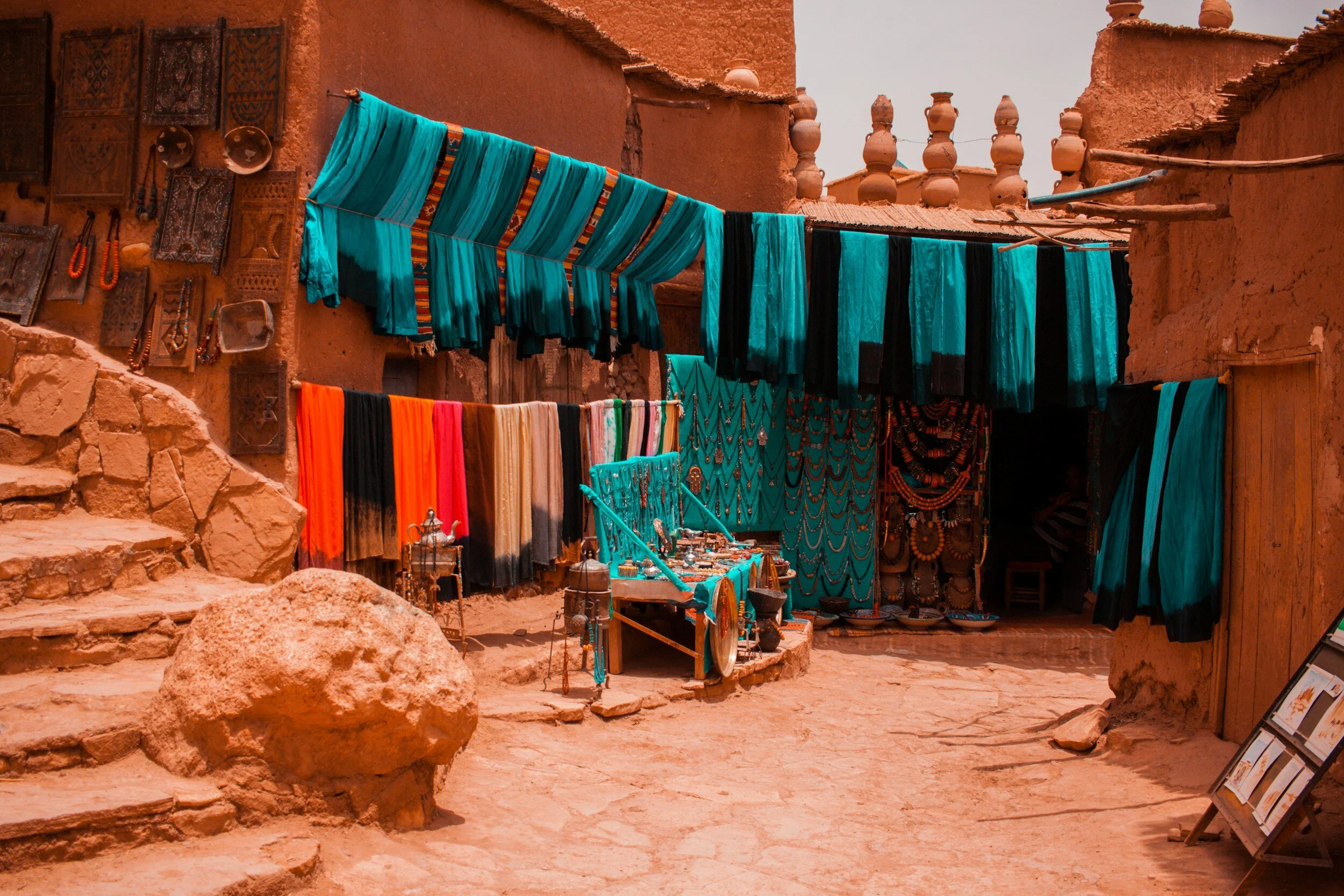
Marrakech
We spend 4 nights in this magical city, spending our nights in a magnificent Riad situated by walking distance from the main city attractions. From the lively Jemaa el-Fnaa square to the amazing souks (or markets) we dived into the history at Bahia Palace, wandered the maze-like Medina for handcrafted treasures, got mesmerized by the colorful Majorelle Garden and found serenity in the peaceful Menara Gardens.
The food was very nice and I can only recommend their harira soup (made out of lentils and with plenty of lemon juice, the chicken or lamb tagine and the famous north african couscous. Their coffee and tea are also a must after every meal.
Some of the eateries we enjoyed were the Majorelle Hotel and Kafé Merstan.
Visiting some sites sight outside of Marrakech
The Atlas Mountain and Toubkal National Park: As a Chilean, who has grown up seeing the Andes Mountain, I felt quite attracted to the Atlas - the tallest mountain in North Africa and the 2nd tallest in the continent after Kilimanjaro. Therefore, we decided to spend a whole day hiking in this beautiful surrounding. Morocco's majestic Atlas Mountains offer a dramatic escape from the bustling Marrakesh. Towering peaks capped with snow in winter provide a playground for hikers and skiers, while Berber villages nestled in valleys showcase a rich cultural heritage. We were lucky enough to trek through the Toubkal National Park and visit ancient Kasbahs perched on mountaintops, all while experiencing the breathtaking beauty and diverse landscapes of Morocco's mountain heartland.
Ouarzazate: On the next day, we got on another bus to head towards Ouarzazate, a city south of Morocco’s High Atlas mountains, known as a gateway to the Sahara Desert. Its huge Taourirt Kasbah, home to a 19th-century palace, has views over the rugged local landscape, which features in several movies and series, such as Gladiator, Game of Thrones or Lawrence de Arabia.
The 2 main things I learnt about the city were:
It is called the "Hollywood of Morocco": since it is a major filming location, nicknamed by nationals as the "Hollywood of Morocco." Its dramatic desert landscapes with kasbahs (fortified villages) and proximity to the Atlas Mountains have made it a popular backdrop for movies like Gladiator, Kingdom of Heaven, and Lawrence of Arabia.
Gateway to the Sahara: Ouarzazate isn't technically in the Sahara itself, but it sits on the edge of the desert, making it a popular starting point for expeditions and tours into the vast sands. Tourists can experience the stark beauty of the Sahara, explore desert towns, and even go camel trekking
And just like that, after 5 busy (and warm) days it was time to head back home.
As a departing point, I wanted to share 5 facts about Marrakesh that I thought were interesting and to some degree, remarkable:
Marrakesh’s nickname is the "Red City": Marrakesh's iconic red hue comes from the clay walls of the old Medina, built using a traditional technique with local reddish earth. This distinctive color is why it's known as the "Red City."
It has been a busy Marketplace for Centuries: Jemaa el-Fnaa square is the heart of Marrakesh and one of the busiest marketplaces in all of Africa. For centuries, it's been a vibrant hub for food stalls, snake charmers, traditional musicians, storytellers, and artisans selling their wares, creating a truly captivating sensory experience.
Home to a Royal Palace (and Hidden Gardens): El Bahia Palace is a stunning example of Islamic architecture, showcasing exquisite courtyards, intricate tilework, and ornate cedar ceilings. But Marrakesh holds another hidden gem: Majorelle Garden, a delightful oasis designed by a French artist. Its cobalt blue walls and lush greenery contrast beautifully with the red city, offering a peaceful retreat.
Palm Groves with Royal Protection: Unlike most cities, it's forbidden to cut down palm trees in Marrakesh. These graceful trees are a cherished part of the city's landscape, and any attempt to cut one down results in a hefty fine. The legend goes that the founder of the city planted the first palm grove and declared them protected.
A Favorite Among Celebrities: Marrakesh't unique charm and rich culture have captivated not just tourists, but celebrities as well. From Winston Churchill, who visited during World War II, to fashion icon Yves Saint Laurent, who found inspiration in the city's vibrant colors, Marrakesh has been a muse and a getaway for many famous figures.
